
WHPS Houses
Memorialised as: “Liberal, humanitarian, fun-filled disciplinarian, scholar, political analyst, sportsman, lover of literature with a zest for theatre, his leadership took WHPS to the forefront of Prep schools in South Africa.”
Wilf MacRobert was an influential figure in the history of WHPS, with a life intertwined with the school from childhood to retirement, reflecting a narrative of personal achievement, emotional investment and educational dedication.
Wilf first arrived at WHPS in 1927, as an eight-year old boy concluding his time at WHPS in 1931. Throughout these foundational years of his youth, he experienced the original character of the school under its iconic founders, the Ruddell brothers, actively absorbing the traditions, structural discipline and core values that would, decades later, dictate his own style of institutional leadership.
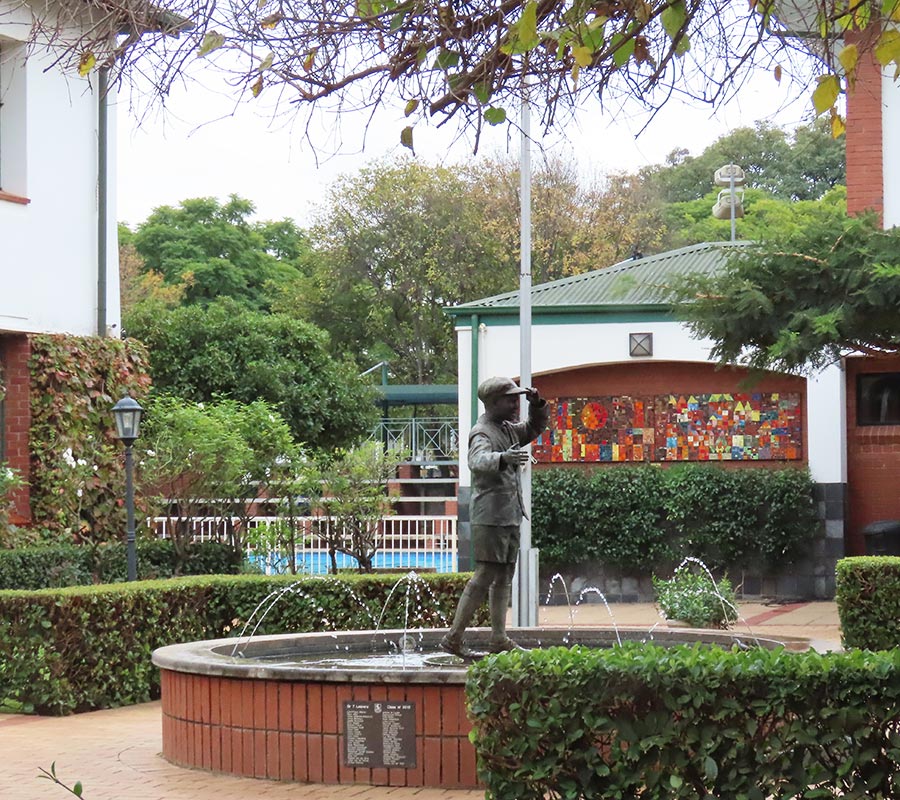
Wilf frequently remarked on the simplicity and unique charm that defined the early school environment. His vivid recollections revealed a boyhood marked by shared adventures, boundless creativity and harmless bits of schoolboy mischief, including playfully reflecting sunlight into teachers’ eyes or secretly hiding messages in the bricks of the walls. After leaving WHPS, he attended Michaelhouse, followed by Rhodes University.
During the Second World War he served with distinction. He initially enlisted with the South African Navy, but later his strategic and communicative abilities were recognised prompting his transfer to the Army, where he was appointed as an Information Officer to the South African Air Force.
In 1946, at the end of the war, Wilf made a triumphant return to the school, entering the gates as a teacher, and signalling a new chapter in his personal career and for the long-term trajectory of the school. Within a year, in 1947, Wilf made the bold and decisive move to purchase the school from the Ruddell brothers, with the formal transition of ownership being finalised around 1948.
Initially hesitant to assume the full burden of responsibility, Wilf gradually stepped into the role of Headmaster under the guidance of Dudley Gower, officially taking up the position in 1950. His first years at the helm were defined by deliberate consolidation, careful financial stabilisation and steady structural growth, building upon the foundations laid by the Ruddell brothers, while introducing his own modern educational vision and youthful energy. He served as Headmaster for almost two decades.
Throughout his tenure, he established himself firmly in the deep affections of the pupils, staff and parents, serving with distinction and leaving a lasting mark on the school. His style of leadership combined firm discipline and personal warmth. He believed in holistic character development, alongside high academic achievement, purposefully fostering an environment in which young boys could safely grow into confident, ethical and responsible individuals.
Beyond leading the school, Wilf became renowned for writing, composing and producing the annual school plays. Featuring songs, dance and humour, these productions became cherished traditions and eagerly anticipated events for boys and parents alike.
Wilf’s influence extended beyond the school. Passionately committed to South African education, he challenged government policies denying private schools financial support, arguing that they provided essential public services. His advocacy reflected a steadfast commitment to educational fairness and excellence nationwide. As a founding member of the Liberal Party with Alan Paton, the celebrated author and activist, Wilf and Marion, his wife, envisioned a school open to boys of all races, colours and faiths, courageously opposing the segregationist social structures of their era.
He helped shape the Old Boys’ Association, refining its tie design and formally incorporating the whippet motif, a symbol that remains a source of pride today. A major milestone came in 1964, when he selflessly sold the school to the Waterkloof House School Trust, ensuring long-term stability, financial security and shared governance. The transition gained support from organisations such as the Oppenheimer Trust, reflecting confidence in the school’s future.
Marion was central to Wilf’s success. Together, they shaped the school’s domestic and moral ethos. She served as a teacher, matron, nurse and caregiver, devoting herself to the boys’ well-being. She taught classes, cared for boarders, and comforted sick or homesick children at all hours. Equally remembered for her lively sense of humour, she delighted in harmless pranks that brought warmth, laughter and joy to daily life on campus.
Marion also played a vital role in the school’s cultural life, helping to produce the annual plays. She designed sets, choreographed dances and coached young actors. Together, they created a disciplined yet nurturing, holistic environment where boys felt valued, supported and genuinely cared for.
In November 1968, the couple retired to the Cape. MacRobert House remembers their legacy of warmth, discipline and excellence. Wilf passed away in 1987.